The Science of Dermal Architecture: Restructuring Dermal Collagen Pathways via Bipolar Radiofrequency
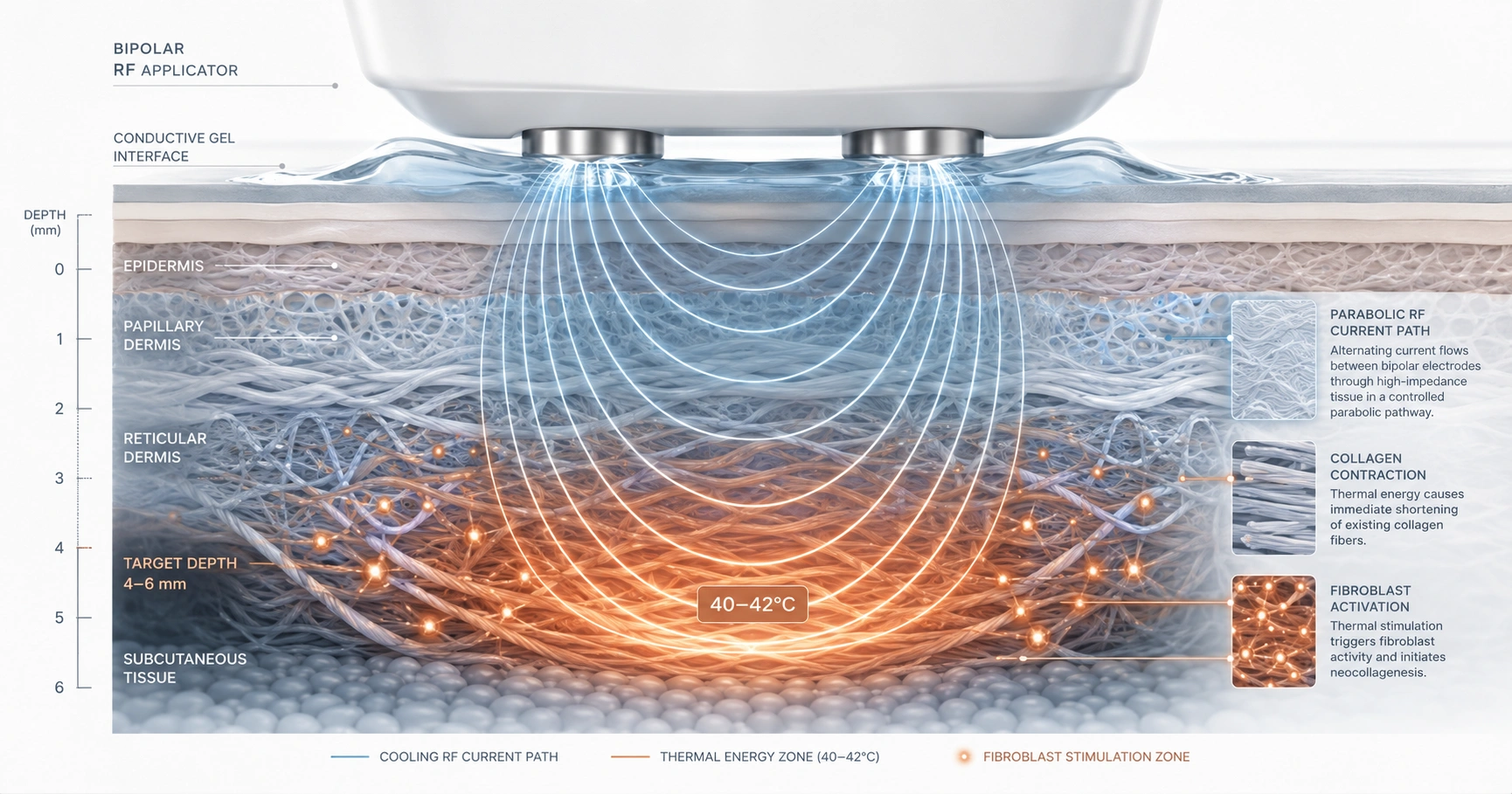
Bipolar radiofrequency periorbital tissue tension protocols utilize deep thermal energy to modify the structural scaffolding of the eye area. Biophysical data demonstrates that impedance-adaptive multi-frequency waves restructure dermal collagen pathways down to a specific depth. Objective Cutometer evaluation verifies measurable changes in gross and biological elasticity metrics. This chromophore-independent modality offers a predictable, rapid microvascular recovery timeline with zero long-term adverse events.
Biophysics of Bipolar Radiofrequency and Thermal Impedance
How does automatic multi-frequency bipolar radiofrequency adapt to dermal impedance?
An automatic multi-frequency low impedance skin tightening protocol distributes alternating electromagnetic waves to a targeted periorbital depth of 4–6 mm. The application utilizes real-time frequency modulations—spanning 0.6 MHz, 0.9 MHz, 1.2 MHz, 1.8 MHz, 2.4 MHz, 2.7 MHz, and 3.6 MHz—to adjust dynamically as baseline skin resistance shifts.
Conducted through a specialized conductive gel, this targeted bipolar rf 4 to 6 mm dermal heating distribution elevates deep tissue thermal baselines until localized erythema appears. The protocol regulates external epidermal temperatures strictly between 40–42°C. The treatment session is terminated precisely when nociceptors detect the target warmth capacity, and the full course consists of five sessions delivered at weekly intervals.
Cellular Mechanisms of Collagen Pathway Restructuring
What is the cellular mechanism of collagen contraction via thermal energy?
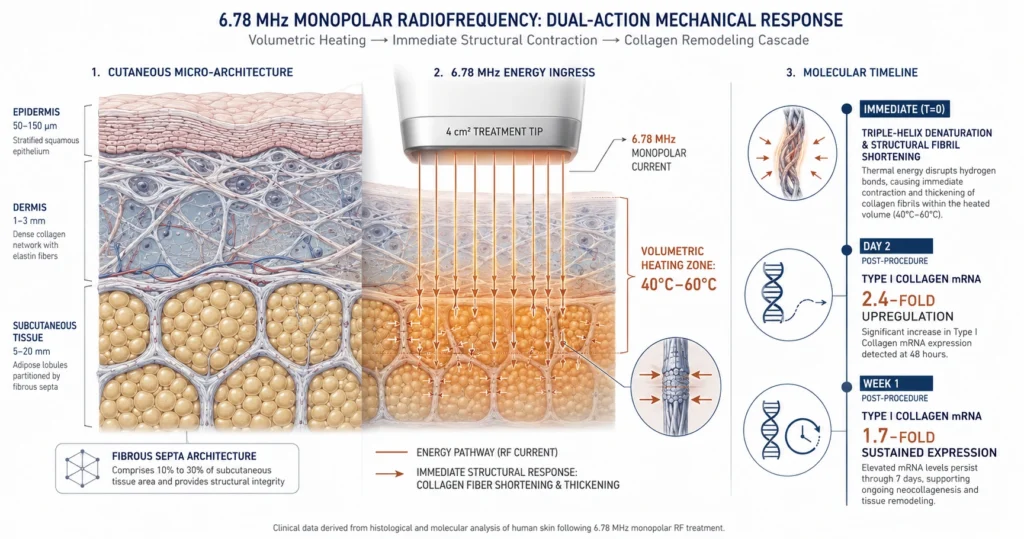
The localized thermal absorption induces an acute contraction of the existing, old collagen fibers within the deep dermal layers. This instant mechanical response stimulates native dermal fibroblasts to execute systemic connective tissue remodeling.
Over a series of weekly sessions, this process drives targeted neocollagenesis and proteoglycan synthesis within the extracellular matrix. The subsequent matrix reorganization alters internal tissue support, strengthening the tissue envelope surrounding the periocular region. This dermal impedance multi frequency eye protocol optimizes the structural integrity of the connective tissue framework without surface disruption.
Objective Quantification via Cutometer R2 and R7 Parameters Radiofrequency Metrics
How do Cutometer R2 and R7 metrics change after a five session radiofrequency protocol?
Biomechanical evaluation using an MPA 580 Cutometer establishes quantifiable evidence of dermal transformation exactly 2 cm below the outer corner of the eye. The objective clinical data tracks specific skin flexibility and tension variations post-protocol, indicating clear biometric improvements.
- Gross Elasticity (R2): Metric parameters demonstrate an objective, cross-sectional advancement of +38.3% (±32.2%) following the series of treatments.
- Biological Elasticity (R7): Measuring immediate skin retraction capacity after complete deformation, this index logs an increase of +87.6% (±88.9%).
- Viscoelasticity (R6): Parameters exhibit a structural stability variance of -2.4% (±22.9%), tracking the relative contribution of viscoelastic, viscous, and elastic deformation to total skin displacement.
Clinical Outcomes and Microvascular Recovery Timeline
Can tightening the cutaneous envelope with bipolar radiofrequency reduce the appearance of lower lid herniation?
The tightening of the overlying cutaneous envelope directly modifies secondary clinical signs of periorbital aging, showing that 5 out of 6 participants presenting with lower lid herniation observed a reduction in bags under the eyes. The structural enhancement of the skin envelope supports the region, though it does not reduce actual underlying fat volume.
As a chromophore independent periorbital skin tightening modality, the radio waves operate independently of skin chromophores, yielding no baseline interaction with melanin or hemoglobin, which results in zero effect on hyperpigmentation or vascular shadows. The transient erythema resolution timeline radiofrequency profile is minimal, with standard localized redness resolving entirely within 1 to 3 hours post-treatment.
References
Kołodziejczak A, Rotsztejn H. Efficacy of fractional laser, radiofrequency and IPL rejuvenation of periorbital region. Lasers Med Sci. 2022;37(2):895-903. doi:10.1007/s10103-021-03329-7.