The Physics of Dermal Remodeling: How Fractional 1064 nm Picosecond Energy Initiates Subsurface Cellular Renewal
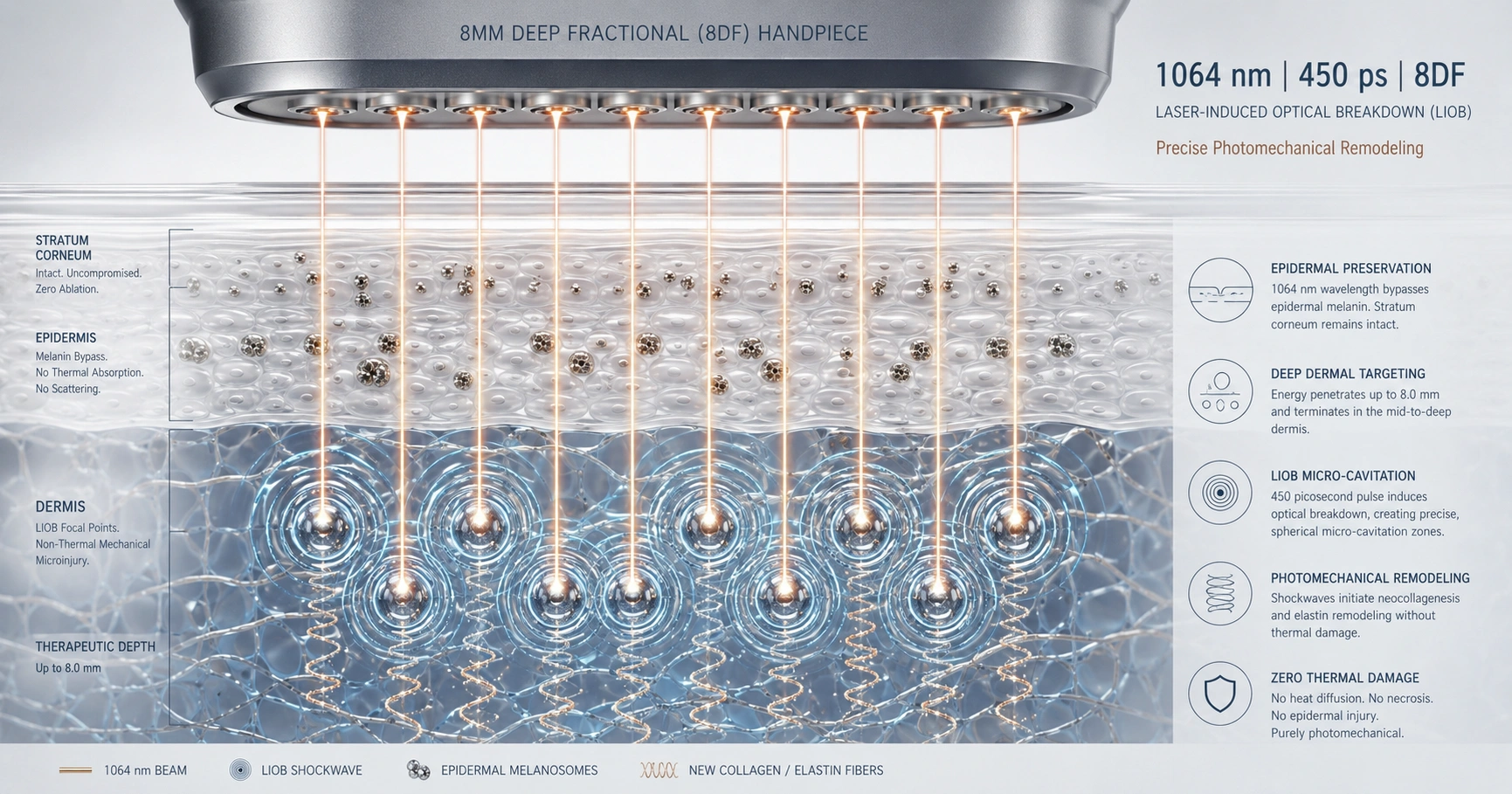
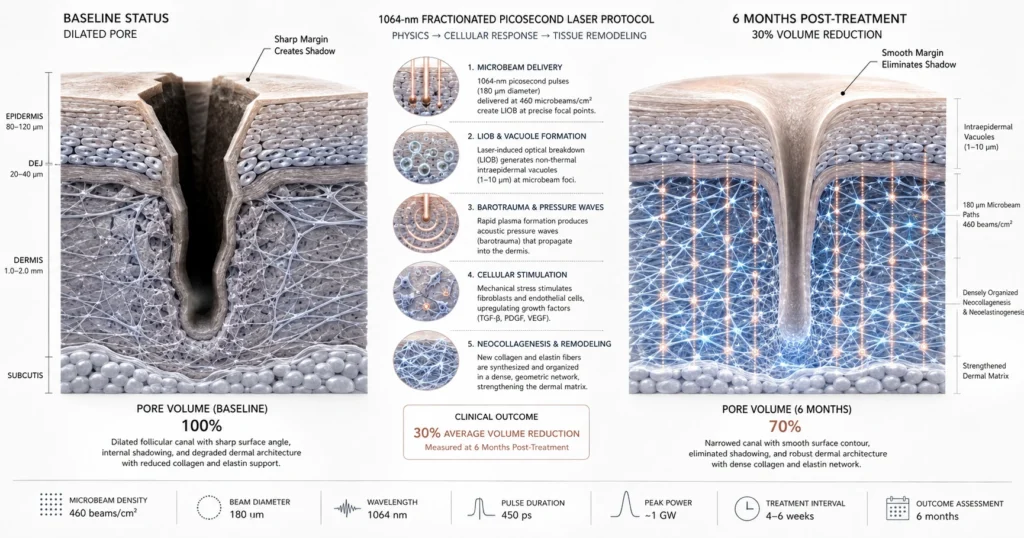
Fractional 1064 nm picosecond laser therapy stimulates facial skin rejuvenation by generating subsurface microinjuries through laser-induced optical breakdown (LIOB). This photomechanical mechanism triggers a controlled inflammatory cascade that accelerates dermal collagen and elastin neogenesis while preserving the overlying epidermis. Clinical data from an Asian cohort confirms statistically significant reductions in facial wrinkles, texture irregularities, and superficial spots over a three-month evaluation period.
Photomechanical Energy Delivery and LIOB
Traditional laser configurations rely on photothermal heating, which introduces thermal risks to surrounding cutaneous tissue. Conversely, delivering optical energy via an ultrashort pulse duration of 450 picoseconds initiates a transition from thermal conduction to intense photomechanical stress. Utilizing an 8 mm deep fractional handpiece equipped with a specialized microlens array, the system focuses energy to create precise subsurface microinjuries. This localized tissue disruption initiates a natural wound healing response, activating fibroblasts to synthesize new structural elements while maintaining stratum corneum integrity to support predictable recovery kinetics.
Strategic Melanin Management in Asian Skin
Rejuvenation protocols for Asian skin phototypes require precise parameters due to elevated baseline melanin indices and a biological predisposition to post-inflammatory hyperpigmentation (PIH). Large, abundant melanosomes distributed throughout the epidermis absorb light and heat across the 532 to 1064 nm optical spectrum. By utilizing a specific 1064 nm wavelength, the fractional laser energy targets deeper dermal structures, bypassing superficial epidermal melanin. This targeted configuration maximizes thermal confinement within the dermis, mitigating heat-related collateral damage to epidermal melanocytes and minimizing pigmentary complications.
Objective Outcomes and Behavioral Dynamics
A retrospective review of 44 participants completing three sessions at 4-week intervals establishes quantifiable benchmarks for this non-invasive approach. Objective assessments using the 3D digital imaging system revealed significant reductions in wrinkles, superficial spots, and brown spots compared to baseline parameters (p < 0.0001). Concurrently, skin texture indices and pore size refinement showed marked architectural improvement starting from the first month (p < 0.01) and sustained through month three (p < 0.0001).
The data also highlights a direct correlation between post-treatment behavioral habits and clinical success rates. Patients exposed to direct peak sun exposure exceeding 60 minutes daily between 9:00 AM and 4:00 PM demonstrated diminished clearance of UV spots (p = 0.01). In contrast, consistent physical barrier protection, such as regular mask-wearing during outdoor transit, correlated with statistically enhanced outcomes for overall spot reduction (p = 0.03).
References
Le TVT, Nguyen PT, Le VA, Ta QH, Zevini A, Martinelli D, Barini R. Fractional 1064 nm Nd:YAG picosecond laser for Asian skin rejuvenation: clinical efficacy and the role of photoprotective behaviours. Lasers Med Sci. 2025 ;40:209 . doi:10.1007/s10103-025-04453-4.