Quantifiable Matrix Restoration: Documented Outcomes in Wrinkle Attenuation and Scar Revision
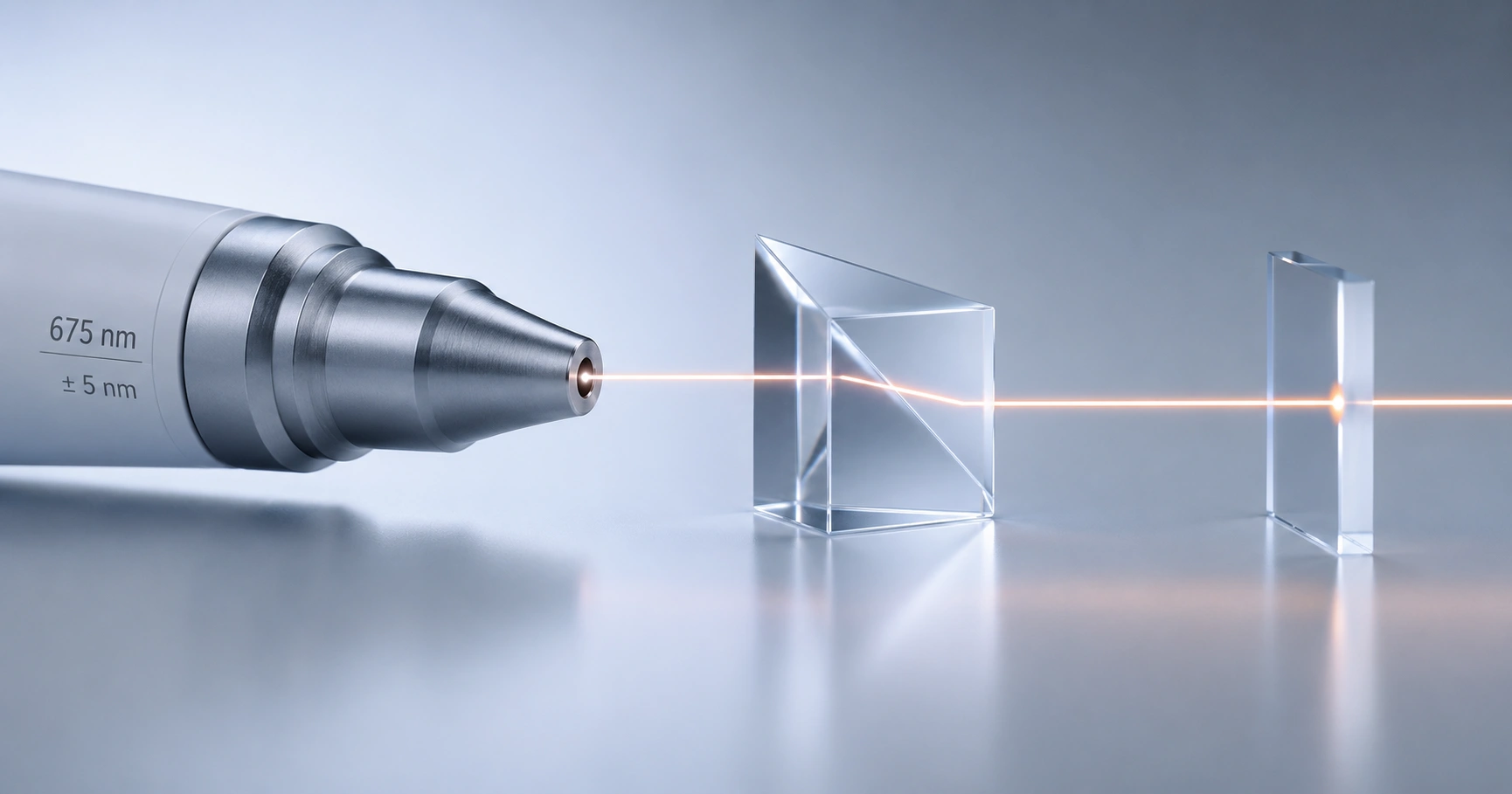
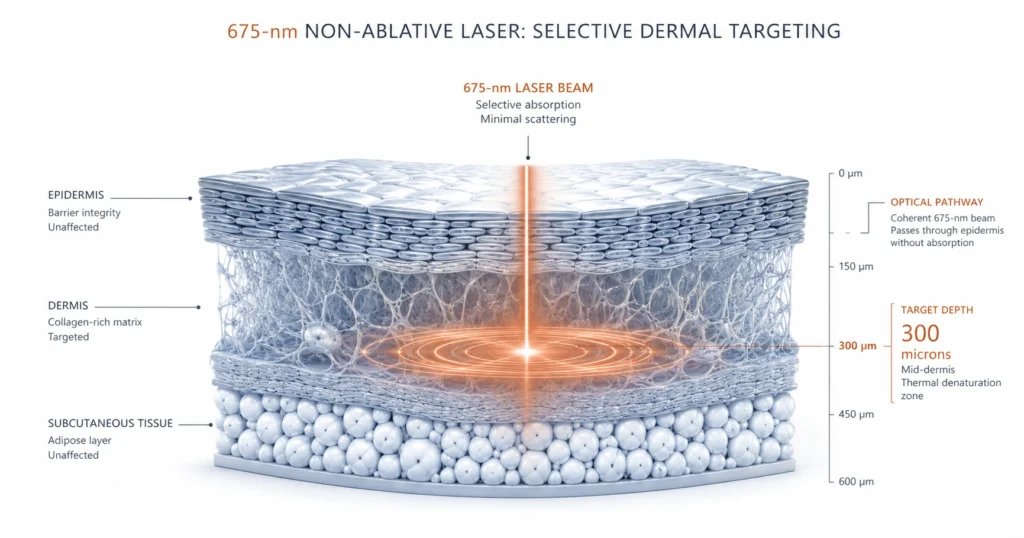
Clinical data from a peer-reviewed trial demonstrates that a fractional non-ablative 675 nm laser isolates thermal energy within the dermis to achieve objective structural skin restoration. By targeting collagen directly at a precise 400 µm depth, this specific wavelength bypasses competing superficial chromophores to reduce facial wrinkles and acne scars without triggering post-inflammatory hyperpigmentation. Objective scale measurements confirm measurable tissue remodeling and matrix restoration with low recovery protocols across skin phototypes III and IV.
How does the 675 nm wavelength selectively target dermal collagen without interacting with hemoglobin or water?
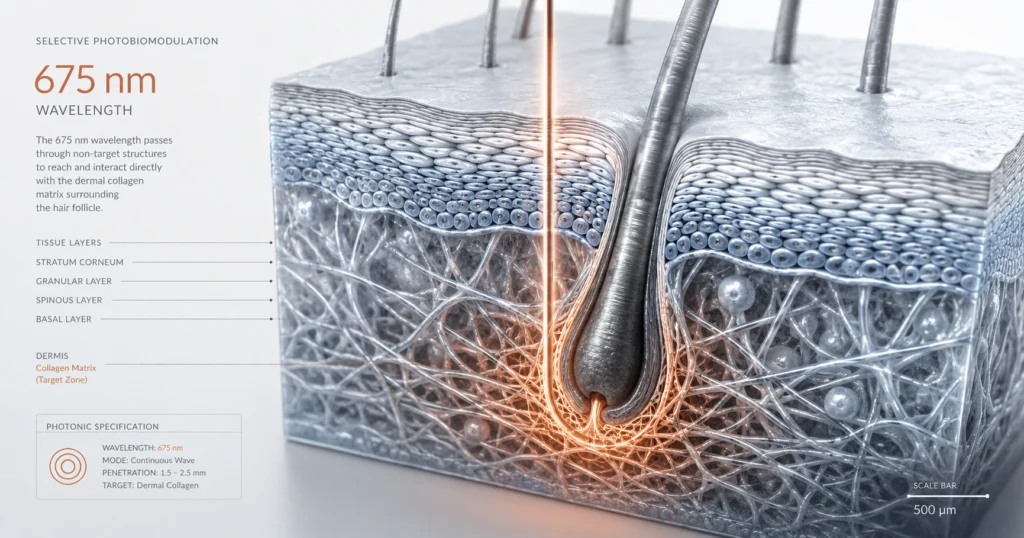
The 675 nm laser targets dermal collagen fibers directly, bypassing alternative chromophores to isolate energy transfer within the extracellular matrix. While wavelengths under 650 nm target hemoglobin and those above 950 nm target water, the 675 nm configuration achieves selective photothermolysis 675 nm dermal collagen interaction.
Device emission operates at a precise calibration matching an atrophic scar revision 400 micron depth laser configuration, avoiding epidermal disruption. Histological findings from skin biopsies confirm targeted dermal tissue remodeling thin collagen fiber synthesis and the structural straightening of elastic fibers, establishing deep dermal matrix restoration via collagen-targeted wavelength mechanisms.
What histological findings demonstrate dermal remodeling following specific collagen-targeted laser therapy?
Objective grading scales confirm a statistically significant reduction in both wrinkle depth and acne scar severity three months post-treatment. A clinical study published in the Journal of Cosmetic Dermatology evaluated 13 Asian subjects with skin phototypes III and IV across three monthly sessions. Investigators monitored clinical outcomes using two objective frameworks:
- Fitzpatrick Wrinkle and Elastosis Scale statistical reduction: Mean wrinkle scores decreased significantly from a baseline of 6 ± 1.2 to 4.2 ± 1.3 at the 3-month follow-up interval.
- Goodman and Baron scar grading laser treatment outcomes: Architectural acne scar deficits declined from a baseline of 4.5 ± 0.4 to 2.4 ± 1.6.
Both assessments achieved high statistical confirmation (p < 0.01), verifying measurable tissue leveling.
What clinical evidence confirms that a non-ablative 675 nm laser prevents post-inflammatory hyperpigmentation in Asian skin types?
The fractional non-ablative mechanism preserves the epidermal barrier, preventing the thermal diffusion that typically causes post-inflammatory hyperpigmentation (PIH) in darker skin types. This creates an energy-based facial rejuvenation minimal vascular interaction profile that simplifies post-session management.
The 675 nm fractional non-ablative laser clinical efficacy is paired with documented patient comfort. Patient-reported tolerance measured via the 5-point Visual Analogue Scale (VAS) showed low mean scores of 1.2 ± 0.4 for wrinkles and 1.3 ± 0.5 for acne scars, meaning topical anesthesia was utilized in only 10% of cases. No severe side effects occurred, and localized, transient micro-burns were restricted to just two subjects, supporting safe fractional laser wrinkle attenuation without post-inflammatory hyperpigmentation.
References
Bonan P, Verdelli A, Pieri L, Fusco I, Linpiyawan R. Facial rejuvenation: A safe and effective treatment with a fractional non-ablative 675 nm laser in Asian population. Journal of Cosmetic Dermatology. 2021;00:1-3. doi:10.1111/jocd.14529.