Advancing Vectoring: Reversing Follicular Miniaturization via Selective Photobiomodulation
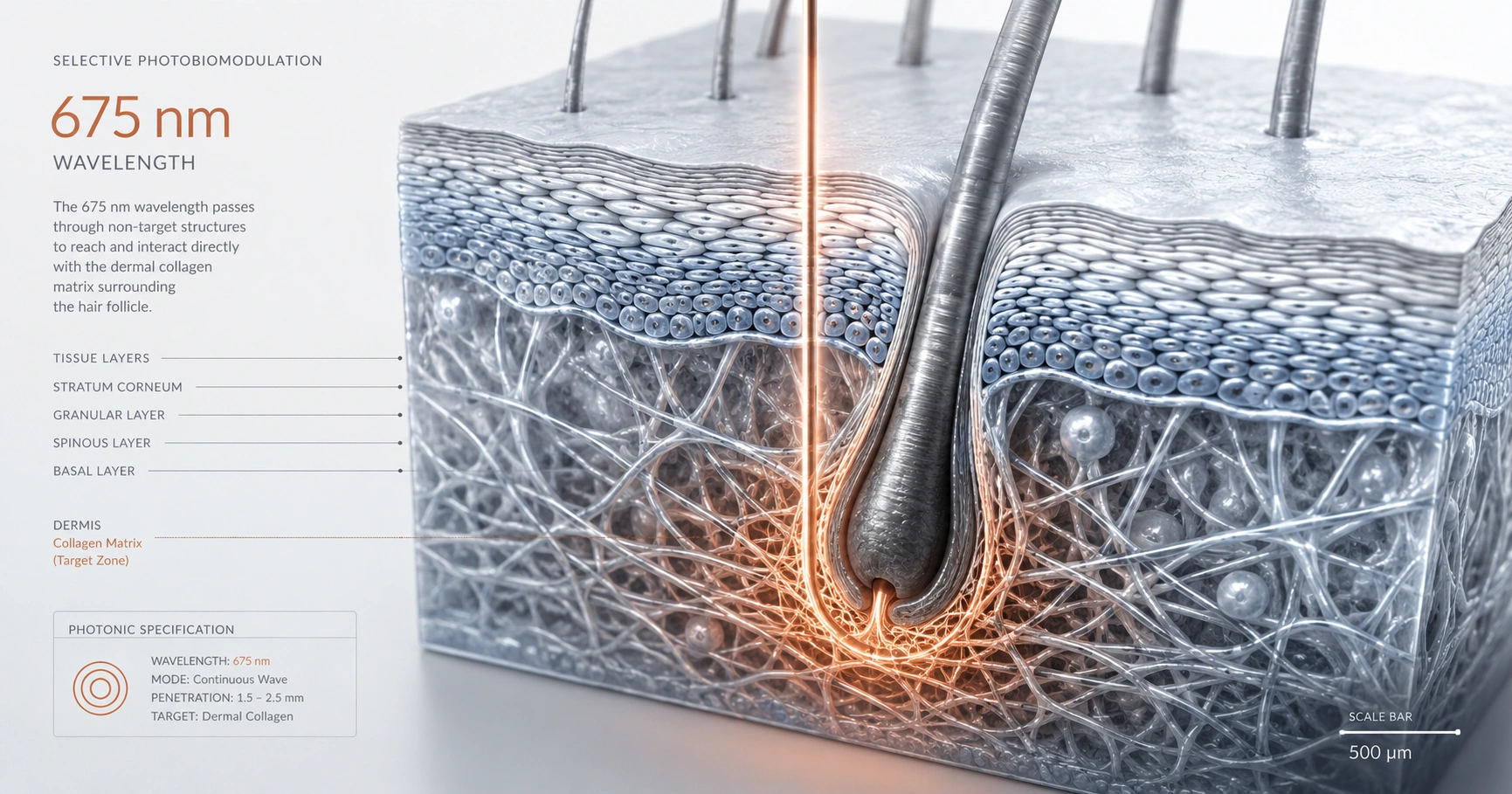
Clinical evaluation of a 675 nm laser system demonstrates a non-pharmacological pathway for reversing hair follicle miniaturization without minoxidil. The protocol utilizes selective photobiomodulation for hair follicle rejuvenation to target the pericapillary collagen matrix, inducing a 17.19% mean increase in hair count and a 13.91% increase in shaft thickness over 4 months. Digital trichoscale analysis confirms a 69.92% expansion of high-density, multi-hair follicular units, offering an objective solution for androgenetic alopecia.
Biophysical Principles of 675 nm Selective Laser Emission
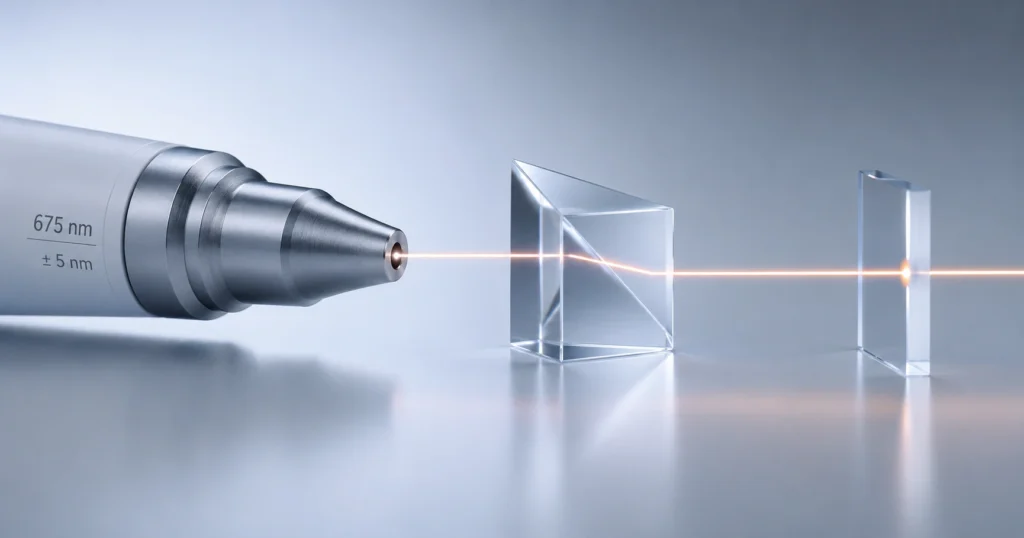
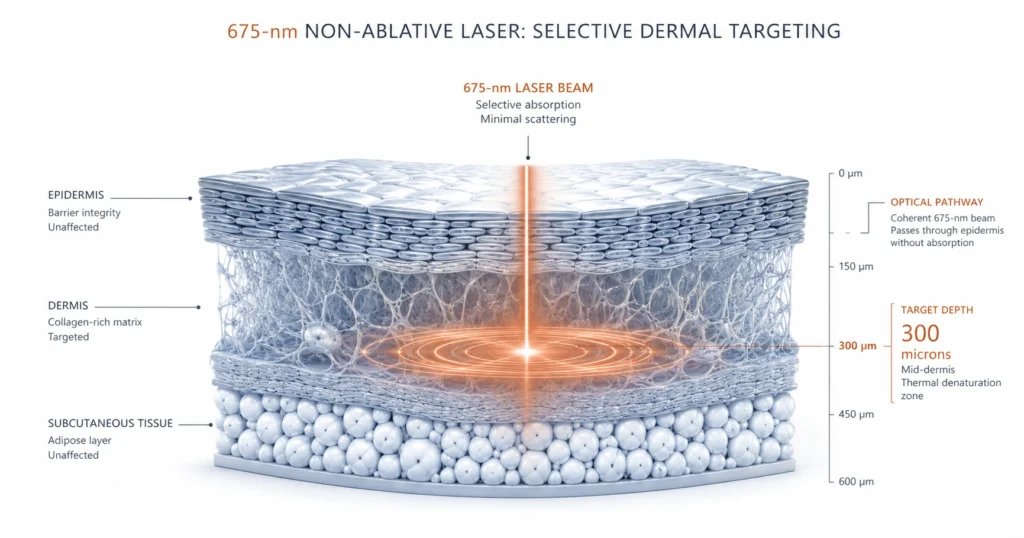
How does the 675 nm wavelength laser target collagen in the scalp for hair growth? It operates directly on the dermal collagen component based on its specific spectrum absorption coefficient, passing cleanly through competing chromophores like hemoglobin and water. The RedTouch laser scalp protocol androgenetic alopecia utilizes a 13×13 mm scanning system to generate subablative fractional laser scalp treatment parameters. This produces a completely reversible thermal area extending 3 to 6 mm deep to biostimulate tissue, while protecting the epidermal layer via a continuous 15°C contact cooling mechanism.
Cellular Mechanisms of Selective Photobiomodulation
The physiological mechanism relies on the absorption of light by mitochondrial protoporphyrin IX, which accelerates adenosine triphosphate (ATP) production. How does mitochondrial ATP upregulation via 675 nm light affect the anagen phase of hair? It triggers downstream transcription factors that extend the active growth phase and postpone catagen regression. Laser biostimulation of hair matrix ki67 biomarker profiles accelerates cellular replication within the hair bulb. This activates fibroblast growth factor (FGF), which upregulates type 1 procollagen and matrix metalloproteinase-9 (MMP-9) to stimulate local angiogenesis and expand microvascular nutrient delivery.
Quantitative Outcomes and Protocol Parameters
An increase follicular unit hair density clinical study tracking 20 subjects over 4 months demonstrated structural improvements across vertex, frontal, and parietal regions. Quantitative digital trichoscale data verified a 17.18% increase in general hair density and a statistically significant (p < 0.05) terminal hair count expansion of 17.45%.
The quantitative dermatoscopic analysis hair thickness improvement verified a 13.91% increase in mean shaft diameter, moving from 0.05 ± 0.01 mm to 0.06 ± 0.01 mm. Can a 675nm fractional laser transition single-hair follicular units into multi-hair clusters? The clinical data shows that single-hair unit counts remained stable, whereas follicular units containing 4 or more hairs increased by 69.92%, awakening dormant atrophic sites into new multi-shaft follicular clusters.
Replicating this 675 nm laser hair restoration clinical data requires a 14-session protocol over a 12-week timeline:
- 8 twice-weekly sessions administered during weeks 1–4.
- 4 weekly sessions administered during weeks 5–8.
- 2 bi-weekly sessions administered during weeks 9–12.
This non pharmacological treatment for hair shaft thinning operates at 1 W power, 100 ms dwell time, and 1000 µm spacing on a water-soaked scalp, minimizing the risk of adverse events while preserving intact skin layers and hair shaft configurations.
References
Chandrashekar BS, Lobo OC, Fusco I, Madeddu F, Zingoni T. The Effectiveness of 675 nm Wavelength Laser Therapy in the treatment Androgenetic alopecia among Indian patients. JMIR Preprints. Published online May 24, 2024. Available from: https://preprints.jmir.org/preprint/60858. DOI: https://doi.org/10.2196/preprints.60858.