The Science of Dermal Remodeling: How the 675-nm Wavelength Stimulates Fibroblast Activity
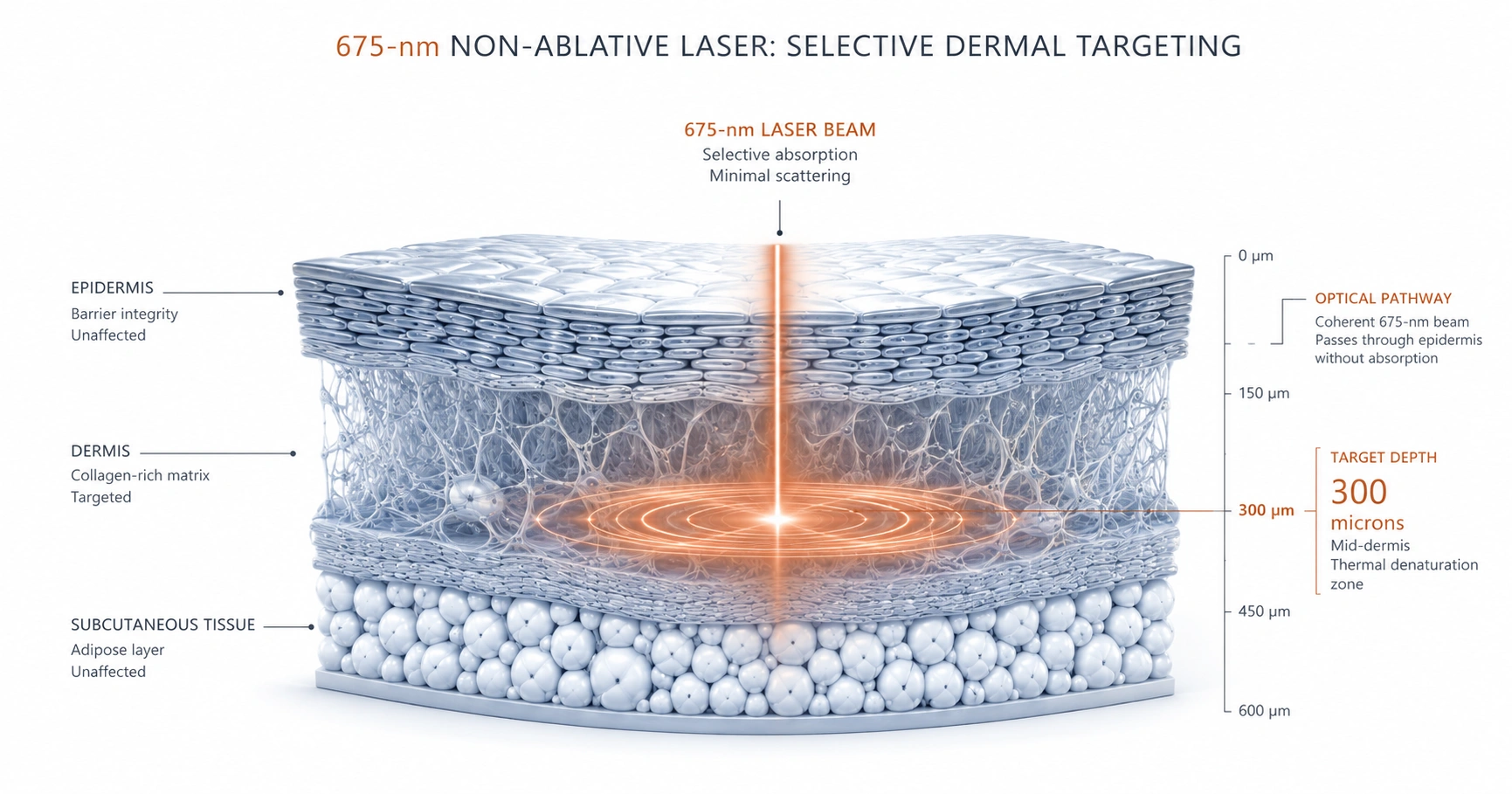
The 675-nm non-ablative laser targets the mid-dermis at an average depth of 300 microns to initiate controlled neocollagenesis through targeted thermal fibroblast activation. Validated clinical data from a 29-patient cohort shows that this wavelength resolves structural matrix degradation, achieving localized volume restoration and structural lifting with zero recovery downtime. Key physiological outcomes include an objective redefinition of the jawline border after a single session and a measured reduction of deep rhytids and infraorbital dark circles after two sessions. This objective clinical approach delivers predictable dermal remodeling while completely preserving epidermal integrity.
Structural Aging and the Shift to Non-Ablative Pathways
Chronological skin aging involves the progressive degradation of dermal collagen fibers and an abnormal accumulation of elastin. This structural matrix breakdown leads to a loss of tissue elasticity, resulting in an increase of wrinkles and the accumulation of melanin that generates visible dyschromia. To address these structural alterations, light-based modalities have transitioned from traditional ablative lasers, peeling, and dermabrasion toward selective non-ablative pathways. Advanced non-ablative laser fibroblast stimulation mechanisms focus on delivering targeted energy to the mid-dermis to initiate protein synthesis while leaving the upper skin layers completely intact.
The Physics and Spatial Dynamics of the 675-nm Spectrum
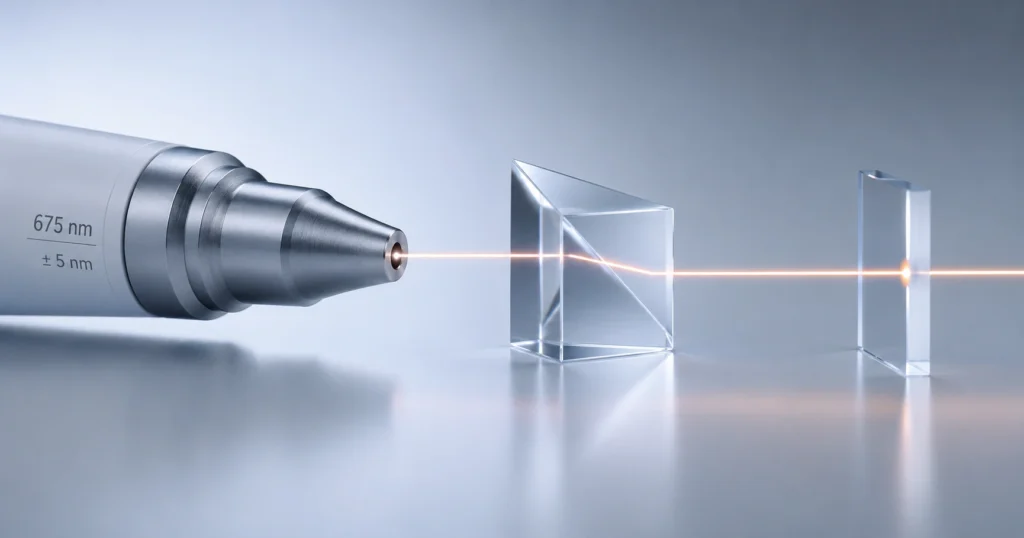
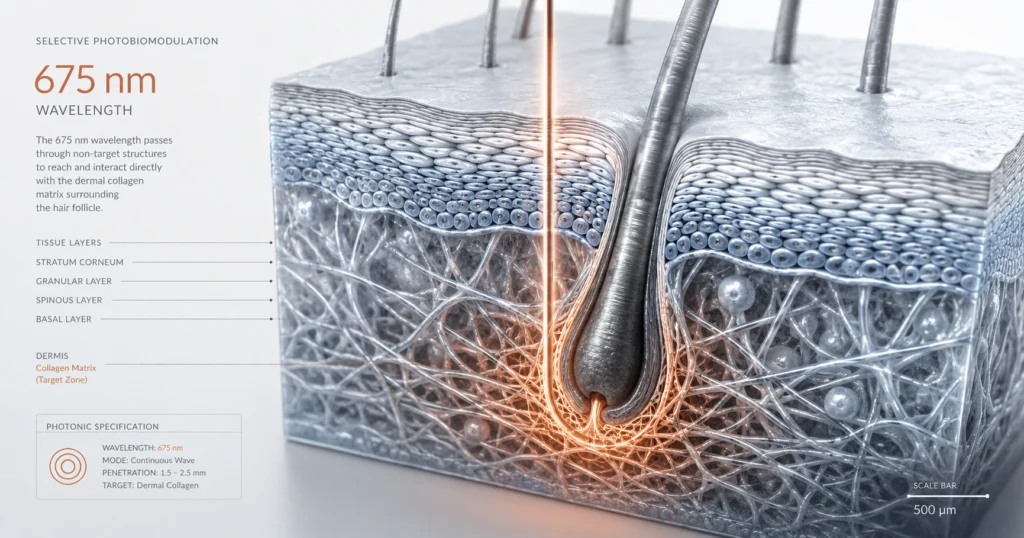
The RedTouch system emits a precise 675-nm wavelength that passes through the outer skin layers to deliver selective thermal energy to the dermis. Clinical data confirms this red light reaches an average depth of 300 microns, targeting specific dermal chromophores to produce localized dermal layer micro-injury.
How does a 675-nm non-ablative laser bypass the epidermis to reach the mid-dermis? The laser head utilizes a computerized $15\times15\text{-mm}$ scanning grid to distribute thermal energy uniformly. This localized impulse induces controlled denaturation of existing senescent collagen fibers, serving as the mandatory physiological trigger for natural matrix repair. Activated dermal fibroblasts then synthesize new collagen strands to restore the structural framework.
Standardized Protocols and Quantifiable Clinical Outcomes
Achieving reproducible architectural changes requires standardized technical settings. Prior to treatment, sequential alcoholic and non-alcoholic cleansing steps are executed to remove sebum and reduce the stratum corneum, ensuring unobstructed energy delivery. Clinical trials maintained a validated parameter matrix consisting of a 10.0 W power output, a 150 ms dwell time, and a 1000-micron spot spacing layout.
Vectra 3D imaging software documented that an improvement in skin texture was achieved for all 29 patients over a two-session regimen spaced 30 days apart. Structural changes follow specific chronological milestones:
- Post-Session One: Patients achieve an increase in cutaneous tone across the lower face, a reduction of chin-labial wrinkles (marionette lines), and an objective non-surgical jawline redefinition via dermal remodeling.
- Post-Session Two: A documented zygomatic region tensor effect post-laser clinical data manifests clearly, minimizing the depth of nasolabial folds and deep wrinkles.
- Dermal Disruption: The wavelength acts directly on deep dermal melanin deposits, increasing periocular elasticity and clearing brownish infraorbital dark circles.
Epidermal Preservation and Safety Thresholds
An integrated contact cooling laser epidermal preservation system actively protects the upper skin layers from thermal stress. This configuration avoids surface ablation, reducing post-treatment response to a slight, transient erythema. With zero clinical downtime, patients immediately return to standard daily activities. This safety profile permits integration into combined treatments for severe facial wrinkles and atrophic acne scars.
References
Piccolo D, Kostaki D, Crisman G, Conforti C. Resurfacing with a new 675-nm laser device: A case series. J Cosmet Dermatol. 2021;20(4):1343-1345. doi:10.1111/jocd.13916