
Introduction & Technology Definition
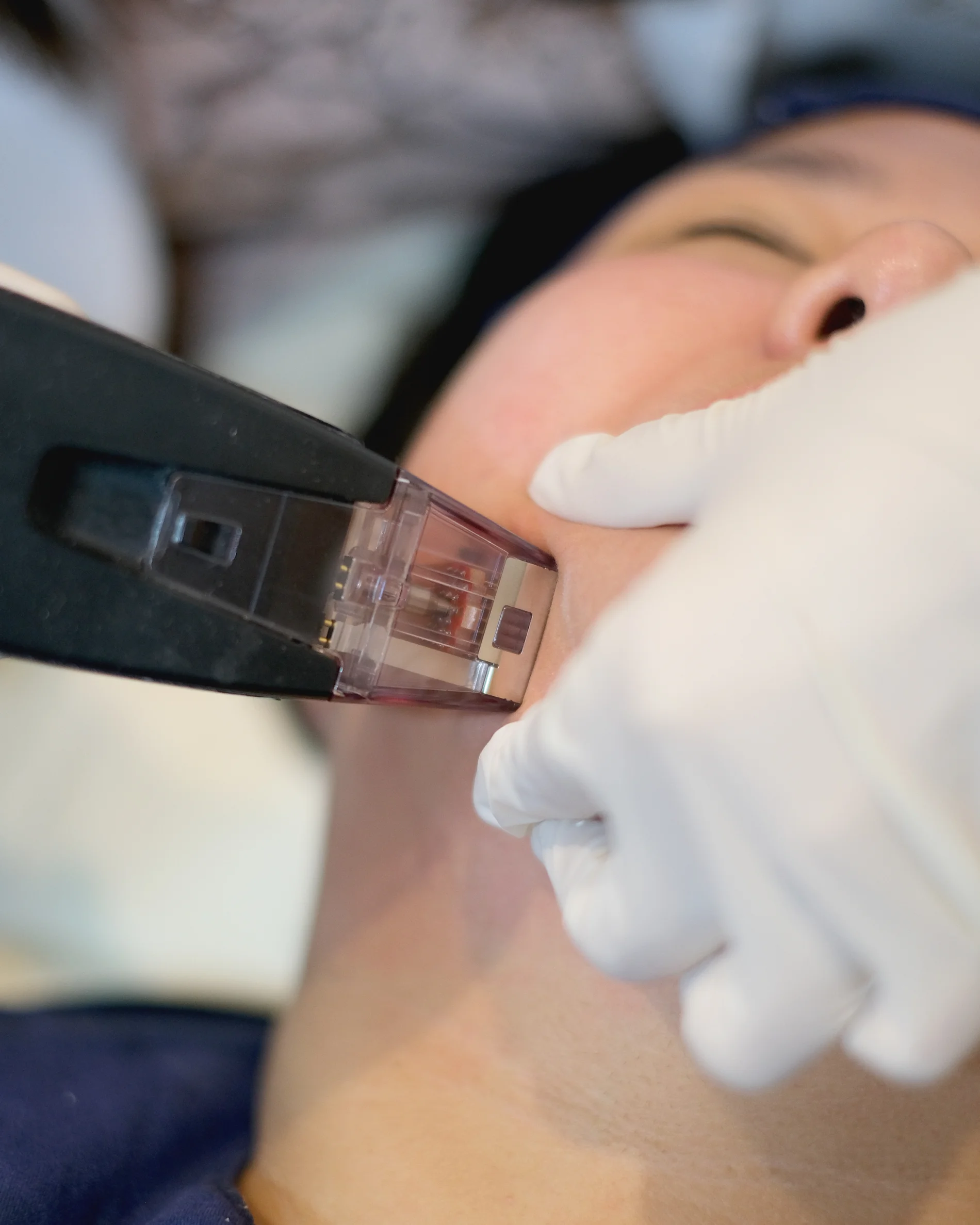
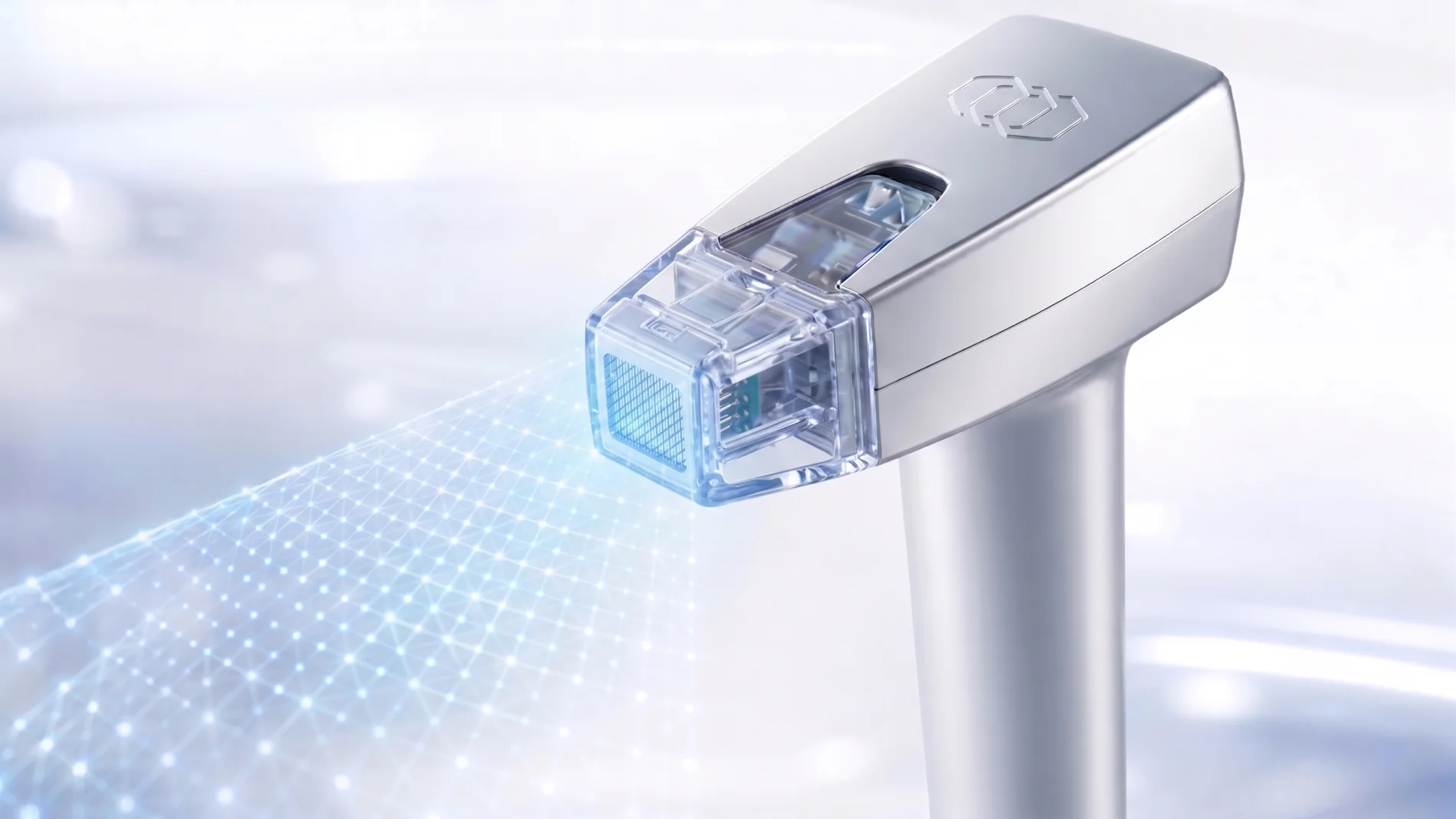
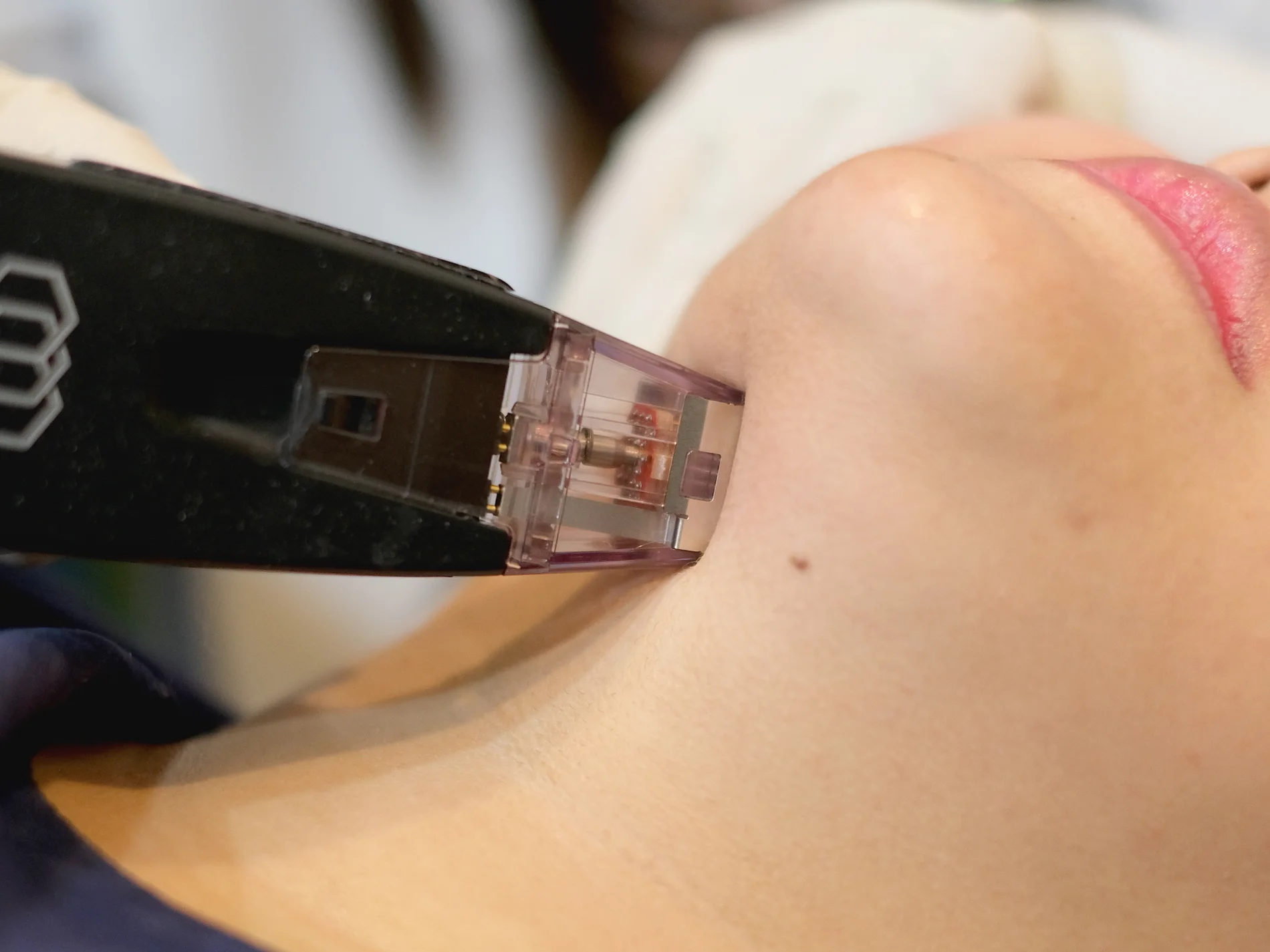
Morpheus8 is a Subdermal Adipose Remodeling Device (SARD) clinically engineered to address structural tissue descent non-invasively. Unlike superficial resurfacing modalities, this system deploys bipolar RF energy into the subcutaneous and reticular dermal layers to induce controlled coagulation zones. Your customized treatment path is grounded in an objective, multi-spectral “Skin Insight 360” baseline evaluation.
Core Mechanism of Action
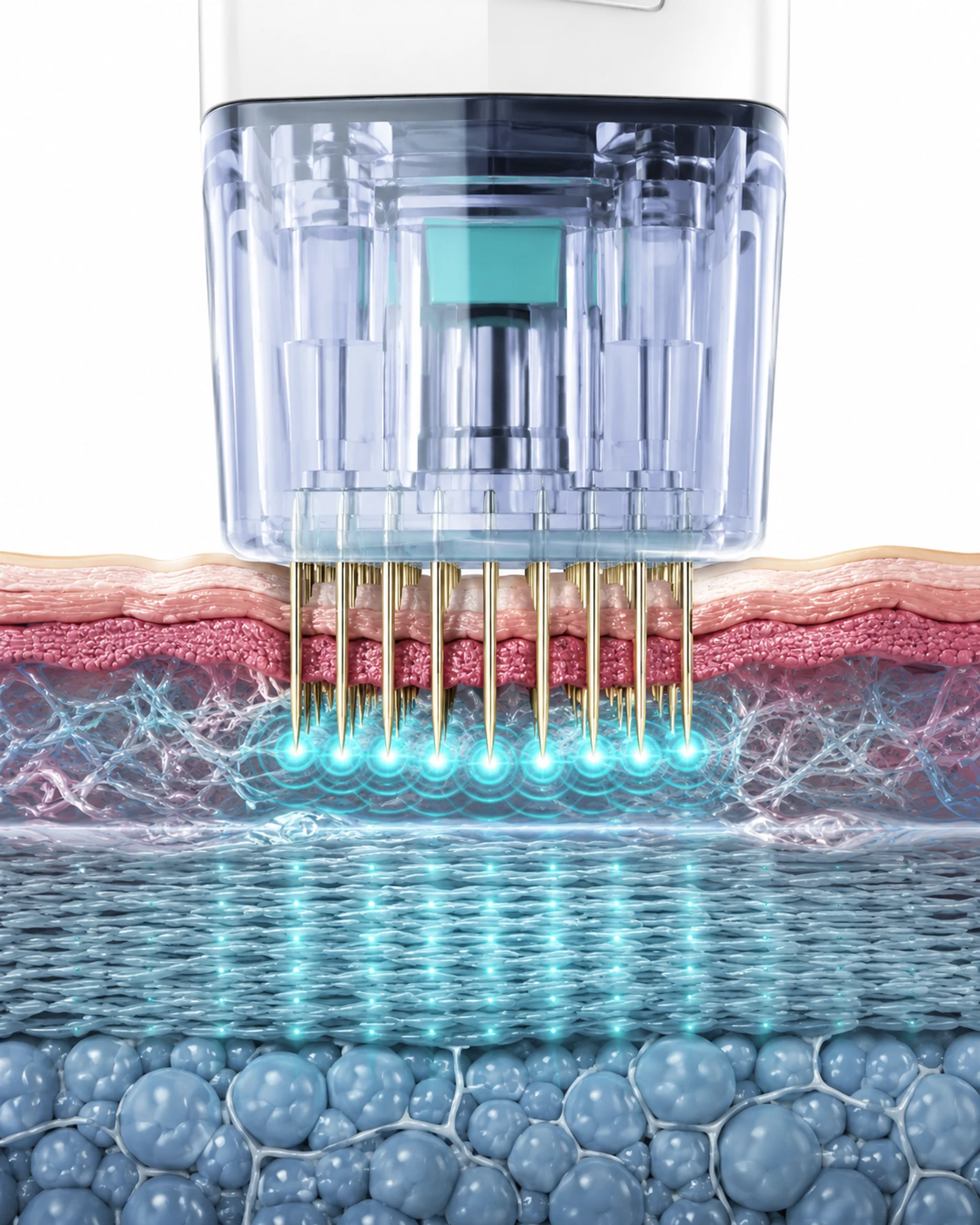
The biological response relies on the synergistic application of mechanical microneedling and localized bipolar radiofrequency thermal current. The biological progression operates across explicit phases:
Microneedle Penetration
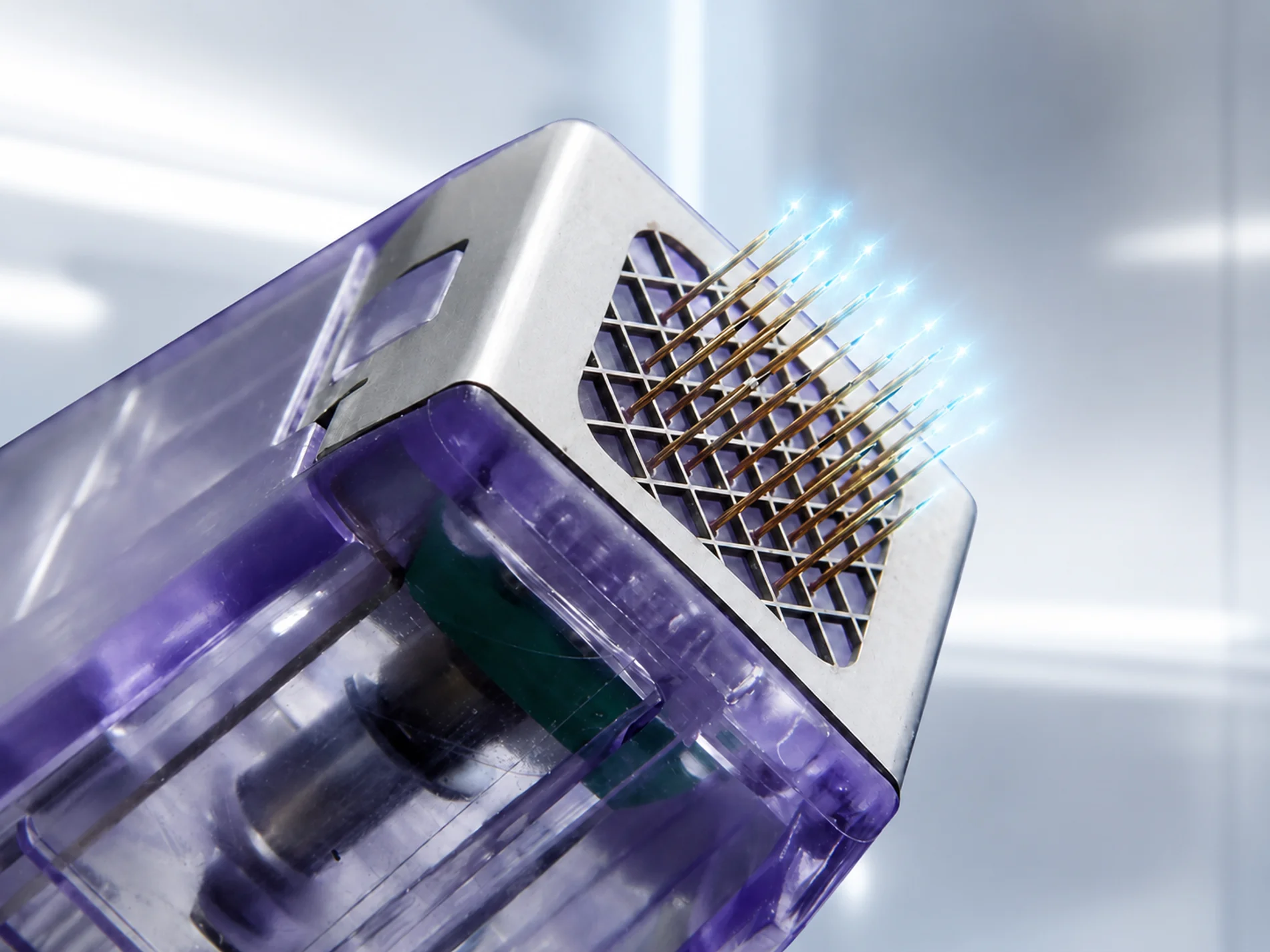
Ultra-fine insulated pins pass through the epidermis to reach precisely calibrated target depths ranging from 1mm to 4mm for facial zones.
Radiofrequency Discharge
A rapid pulse of bipolar RF energy discharges strictly from the uninsulated needle tips, encountering tissue impedance to generate temperatures between 65°C and 80°C to initiate fibroseptal network contraction.
Cellular Cascade & Neocollagenesis
The micro-injuries initiate a three-phase healing response—an Inflammatory Phase (Days 1–3) to clear debris, a Proliferative Phase (Weeks 1–6) to synthesize Type III collagen, and a Maturation Phase (Months 2–6+) that converts fibers into dense Type I collagen to rebuild skin tensile strength.
Key Indications & Targeted Areas
As biological tissue structures age or undergo trauma, structural depletion and surface alterations can alter facial definition. This protocol is systematically utilized to manage:
Submental and Jawline Indistinction
Softening along the lower facial border where tissue relaxation obscures definition.
Subdermal Tissue Descent
Early structural drooping requiring non-surgical, progressive tissue contraction.
Atrophic Acne Scarring
Structural depressions (boxcar, rolling, and ice-pick scars) requiring deep tissue volumization.
Textural Irregularities
Rough surface micro-textures and enlarged follicular pores.
Body Tissue Laxity
Skin relaxation and stretch marks on the abdomen, periumbilical zone, and above the knees.
Clinical Benefits & Expected Outcomes
Because results rely on your own deep cellular repair cascade and structural protein maturation, refinements emerge progressively over several weeks rather than instantaneously.
- Visual Improvements: Noticeable tightening of lower facial borders, smoothing of atrophic scar tracts, and reduction in enlarged pore geometries.
- Sessions Required: Optimal structural remodeling typically requires a structured series of 3 to 4 sessions spaced 4 to 6 weeks apart.
- Time to Result: Visible refinements in tissue firmness and structural contours emerge progressively over a 3-to-6-month timeline.
- Longevity: The newly formed Type I collagen matrix provides a long-term foundation; a single maintenance session is suggested every 12 to 18 months.
Who May Be Suitable
Best suited to those with mild-to-moderate skin laxity or textural deficits who want an advanced, scientifically grounded solution. It is particularly valuable for:
A Skin Insight 360 evaluation during your visit confirms whether this protocol fits your profile.
- Fitzpatrick Skin Types I–VI Melanin-rich or darker skin tones seeking deep remodeling with a low risk profile for post-inflammatory hyperpigmentation.
- Textural and Volume Revision Individuals addressing atrophic acne scars or facial jowl adjustments without open operative care.
- Travelers with Adaptive Timelines International clients seeking progressive tissue contraction who can accommodate a brief social recovery window.
Considering this protocol for your visit?
Book a ConsultationTreatment Experience & Workflow
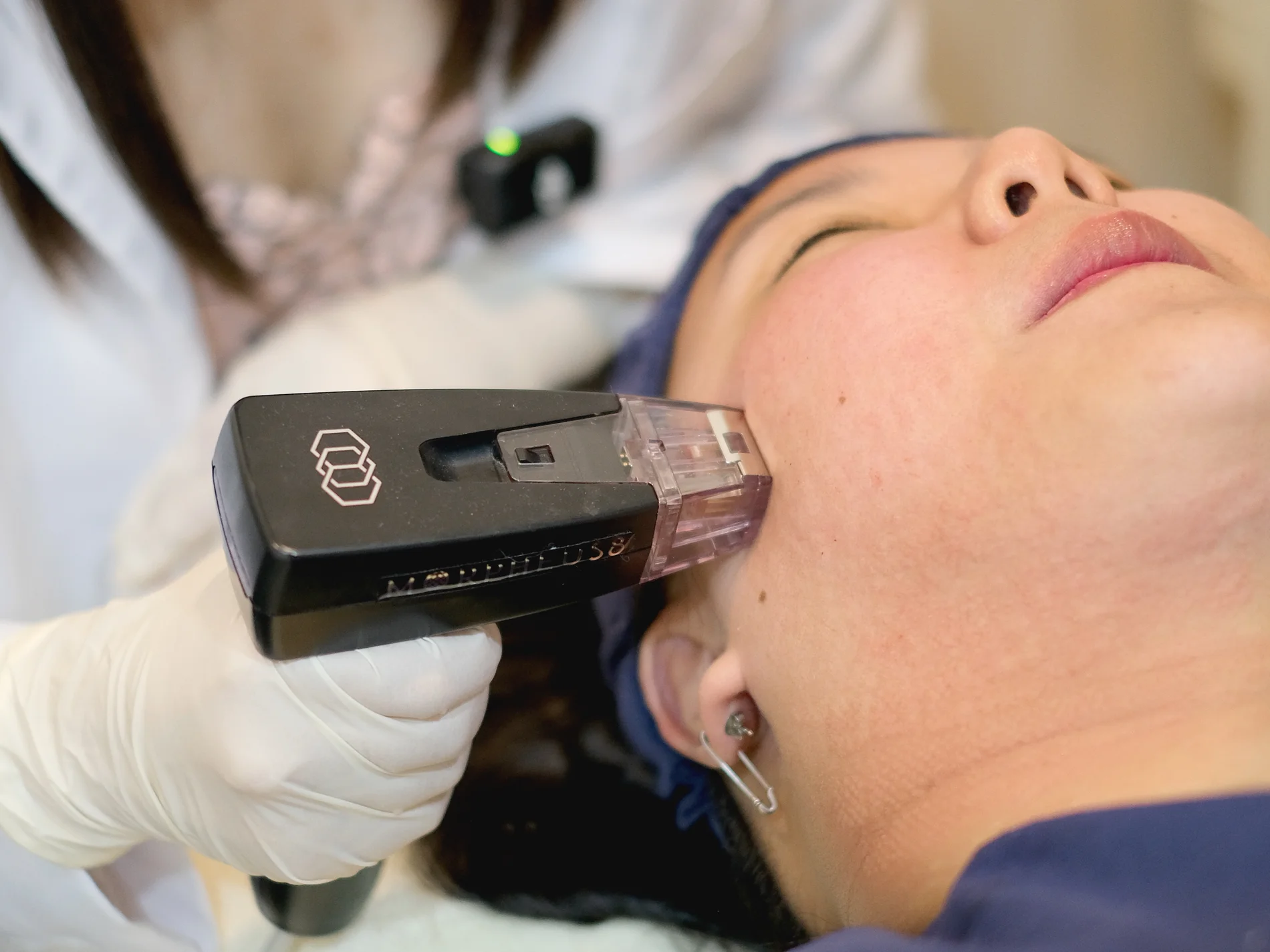
Sessions deliver highly controlled fractional bipolar energy configurations across customizable structural depths from 1mm to 7mm using specialized face or body tips.
-
1
Preparation
The target area is cleansed, and a high-potency topical local anesthetic compound is uniformly applied to manage surface pathways.
-
2
Comfort Management & Setup
Regional blocks or local infiltration are administered by the clinical team for highly sensitive vectors if deep body parameters are planned.
-
3
Active Procedure
The advanced handpiece passes across the zone, continuous tracking tissue impedance while deploying a firm mechanical pressure sensation followed immediately by a sharp warming flash.
-
4
Post-Treatment Stabilization
Puncture points are cleared, a clean barrier-repair balm is applied to protect the open micro-channels, and deep aftercare parameters are verified.
Before & After Care
Before Your Visit
The program requires strategic clinical coordination. The following guidelines support safety and an optimal skin response:
- Skin Readiness: The target treatment zone must be entirely free of active cutaneous infections, open wounds, or cystic acne.
- Injectable Coordination: Ensure a minimum waiting interval of 4 to 6 weeks if dermal fillers were recently placed in the same anatomical zone.
- Medical Review: Disclose history of keloidal or severe hypertrophic scar formation during baseline evaluation.
After Your Treatment
The session triggers an active epidermal response. Adhering to these parameters preserves barrier rehabilitation
- Vascular Response (Hours 0–24): Manage standard generalized redness and mild-to-moderate swelling; keep skin free of cosmetics, fragrances, or active topicals.
- Epithelial Healing (Days 1–3): Expect pinpoint micro-crusts and a texture like fine sandpaper; maintain strict non-comedogenic broad-spectrum sun protection.
- Social Recovery (Days 4–7): Allow crusts to naturally flake away during standard gentle cleansing; reintroduce regular makeup once redness fades.
- Skincare Exclusions: Discontinue retinoids, alpha-hydroxy acids (AHAs), beta-hydroxy acids (BHAs), and active vitamin C for 5 to 7 days.
- Travel Window Caution: Boarding a flight within the first 48 hours is discouraged; low cabin humidity can accelerate transepidermal water loss and prolong swelling.
Following your session, the skin enters a phase of natural stabilization and tissue renewal. Adhering to these post-treatment guidelines will help support your results and maintain tissue comfort during the recovery period.
Ready to plan your session?
Book a ConsultationSafety Profile, Side Effects & Contraindications
Morpheus8 utilizes an advanced handpiece configuration that continually monitors tissue impedance to deliver precise, medically responsible thermal boundaries.
Common, Temporary Side Effects:
- Redness & Swelling: Erythema resembling a sunburn, resolving within 3 to 5 days.
- Textural Sandpaper Sensation: Micro-crusts forming at needle insertion sites, naturally shedding within 7 days.
- Subsurface Tenderness: Mild internal sensitivity as the dermal matrix undergoes structural maturation.
Contraindications — the protocol may not be suitable for:
- Active Inflammatory Issues: Open wounds, active localized infections, or severe active cystic acne.
- Implanted Electrical Items: Internal pacemakers or implantable cardioverter-defibrillators (ICDs).
- Foreign Structural Elements: Permanent metal implants or very recent dermal fillers in the target energy pathway.
Frequently Asked Questions
Adipose tissue remodeling is restricted to areas with redundant volume (like the jowls or submental fat) using deep parameters of 4mm or more. For mid-face or volume-critical zones, shallower depth configurations are used to target the dermal matrix while protecting fat architecture.
Optimal structural improvements are generally achieved through a structured series of 3 to 4 sessions, spaced approximately 4 to 6 weeks apart.
The synthesized Type I collagen matrix establishes a long-term foundation inside the tissue, though skin remains subject to natural chronological aging. Single maintenance sessions are suggested every 12 to 18 months.
Needle penetration creates brief micro-channels through the stratum corneum, briefly interrupting the lipid barrier and increasing transepidermal water loss until micro-crusts rise and naturally shed within 7 days.
Retinoids, exfoliating acids (AHAs/BHAs), and high-potency vitamin C serums must be paused for 5 to 7 days, and reintroduced only when micro-crusting and redness have fully resolved.
Yes, but filler treatments require a minimum safety interval of 4 to 6 weeks to prevent thermal energy from interacting with the cross-linked matrix, while botulinum toxin can be administered 2 weeks post-procedure.
At follow-up checks (weeks 4 and 12), it measures structural density improvements, tracks the reduction of vascular redness, and tracks the smoothing of surface texture variations.
Flight environments combine low humidity and pressure changes that accelerate water loss and increase swelling, which can compromise barrier repair if undertaken within the first 48 hours.
Yes; the thinner neck tissue is protected by utilizing specialized depth limitations and insulated pins to target the superficial fibroseptal networks while avoiding deep vascular or glandular structures.

Consultation Process
A formal clinical consultation is mandatory before planning an advanced subdermal remodeling configuration. During your personal assessment at Shayne & Co. Clinic, our medical team will thoroughly review your clinical history, evaluate facial structural dynamics, and utilize the Skin Insight 360 system to execute multi-spectral analysis of your dermal density and epidermal barrier integrity. This evidence-based custom mapping ensures your care protocol is safe, anatomically appropriate, and aligned with your long-term aesthetic longevity goals.
Book a Consultation